SCHEDULE FOR PART II
09/10/2013
We are tremendously excited to embark on PART II of Theorems, Proofs, Rebuttals, and Propositions: A Conference of Theoretical Theater. The power of the theorizing performed by each of the plenary artist-theorists and the participation and attention performed by all of the participants have been “transformative” in a plethora of ways.
We now have the opportunity to continue to theorize using the process and practices of performance to variously split, reinforce, explicate, re-design, represent, rebut, and reify any theories developed by PART I. These presentations will occur at Glasshouse (246 Union Avenue) over the course of two days, THURSDAY, SEPTEMBER 12, and FRIDAY, SEPTEMBER 13.
Thursday, September 12
7: Samita Sinha: Responding to Amapola Prada and Mike Taylor
7:25: Amalia Mathewson: Responding to Amapola Prada
7:50 Karen Schiff: Responding to Mike Taylor
8:15: Gelsey Bell: 12 OBSERVATIONS, 7 ADDITIONS, 2 QUESTIONS, 1 DESIRE (Responding across plenary presentations)
8:40: Anya Liftig: Responding to Kikuko Tanaka
9:05: Gavin Kroeber: Responding to Mike Taylor
9:30: Dhira Rauch: Praxis and its Discontents and Revolving Complicities in Time Based Art. Responding to Amapola Prada and Kikuko Tanaka
9:55: Laylage Courie: Responding to Mike Taylor
10:20: Igor Rodriguez: Presentation on Logos Responding to Reality Research Center
10:45 Chloe Bass: Responding to Kikuko Tanaka
11:05-11:30: wrap-up discussion and clean-up
FRIDAY
7-8pm Erin Mee: (durational) In response to Reality Research Center, I have installed several activities around the presentation room to be done solo or in small groups as you wish. I invite you to join me.
7: Shawn Chua: Responding to Reality Research Center
7:25: Cat Tyc: Responding to Kikuko Tanaka
7:50: Valerie Kuehne: Responding to Kikuko Tanaka
8:15: Julia Lee Barclay-Morton: Responding to conference at large
8:40: Nik Wakefield
<break, 10 minutes>
9:15: Sarah Butler: Agreement Responding to conference at large
9:40: Howard Pflanzer: FEAST: LINE-UP (Responding to Amapaola Prada) Response developed in collaboration with Renee Conly and performed by Renee Hermiz
10:05: Kikuko Tanaka: Responding across plenarists
10:30: Michael DiPietro: Responding across plenarists
10:50 Lorene Bouboushian: Responding to Amapola Prada
11:20pm-all hours of the night: Closing Party at PPL, down the street
Images from PART I
09/09/2013
-
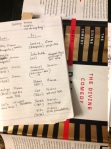
- Yelena’s notebook as we plan Thursday, September 12 and Friday, September 13th response presentations at Glasshouse!
-
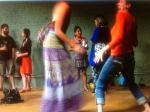
- Discussion and wrap-up of PART I at Collapsable Hole
-
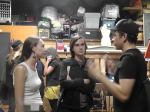
- Conversation continues after the discussion of Mike Taylor’s IDEA MACHINE moderated by Gavin Kroeber (right)
-
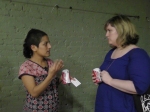
- Amapola Prada and Anna Watkins Fisher
-
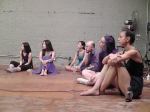
- IDEA MACHINE workshop at Collapsable Hole, Mike Taylor’s plenary presentation, with cast and conference participants
-
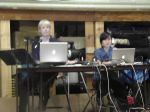
- Mike Taylor and primary collaborator Iki Nakagawa
-
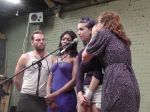
- IDEA MACHINE workshop at Collapsable Hole, Mike Taylor’s plenary presentation, with cast and conference participants
-
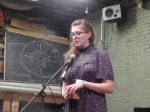
- IDEA MACHINE workshop at Collapsable Hole, Mike Taylor’s plenary presentation, with cast and conference participants
-
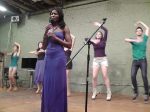
- IDEA MACHINE workshop at Collapsable Hole, Mike Taylor’s plenary presentation, with cast and conference participants
-
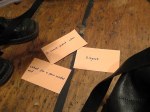
- IDEA MACHINE workshop at Collapsable Hole, Mike Taylor’s plenary presentation, with cast and conference participants
-
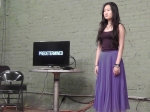
- IDEA MACHINE workshop at Collapsable Hole, Mike Taylor’s plenary presentation, with cast and conference participants
-
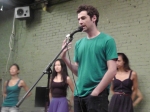
- IDEA MACHINE workshop at Collapsable Hole, Mike Taylor’s plenary presentation, with cast and conference participants
-
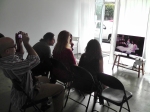
- Conference participants view video of RRC
-
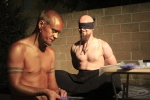
- Act IV of PLATO’S SYMPOSIUM by Reality Research Center, at Glasshouse. Photo by Wisa Knuuttila
-
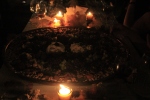
- Act IV of PLATO’S SYMPOSIUM by Reality Research Center, at Glasshouse. Photo by Wisa Knuuttila
-
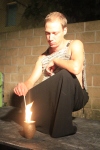
- Act IV of PLATO’S SYMPOSIUM by Reality Research Center, at Glasshouse. Photo by Wisa Knuuttila
-
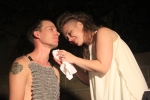
- Act IV of PLATO’S SYMPOSIUM by Reality Research Center, at Glasshouse. Photo by Wisa Knuuttila
-

- Act IV of PLATO’S SYMPOSIUM by Reality Research Center, at Glasshouse. Photo by Wisa Knuuttila
-
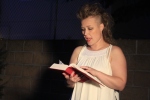
- Act IV of PLATO’S SYMPOSIUM by Reality Research Center, at Glasshouse. Photo by Wisa Knuuttila
-
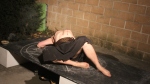
- Act IV of PLATO’S SYMPOSIUM by Reality Research Center, at Glasshouse. Photo by Wisa Knuuttila
-
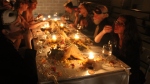
- Act IV of PLATO’S SYMPOSIUM by Reality Research Center, at Glasshouse. Photo by Wisa Knuuttila
-

- Tuomas Laitinen as Apollo. Photo by Wisa Knuuttila
-

- Carmen C. Wong prepares dinner for Act IV of RRC’s PLATO’S SYMPOSIUM at Glasshouse, with Lital Dotan
-
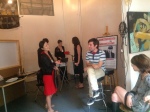
- After the discussion session of Kikuko Tanaka’s POULTRY PARADISE AND ITS DISCONTENTS: NIGHTSHIFTS moderated by Chloe Bass
-
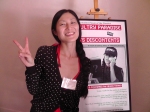
- Kikuko Tanaka
-
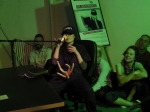
- Kikuko Tanaka during her plenary presentation at PPL
-
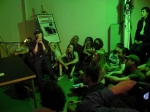
- Kikuko Tanaka’s POULTRY PARADISE AND ITS DISCONTENTS: NIGHTSHIFTS at PPL
-
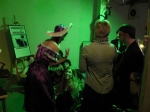
- Kikuko Tanaka’s POULTRY PARADISE AND ITS DISCONTENTS: NIGHTSHIFTS at PPL
-
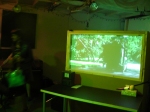
- Kikuko Tanaka’s POULTRY PARADISE AND ITS DISCONTENTS: NIGHTSHIFTS at PPL
-
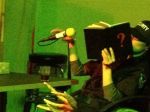
- Kikuko Tanaka’s POULTRY PARADISE AND ITS DISCONTENTS: NIGHTSHIFTS at PPL (Photo by Json)
-
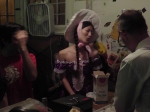
- Kikuko Tanaka’s POULTRY PARADISE AND ITS DISCONTENTS: NIGHTSHIFTS at PPL
-
- Conference participants before Kikuko Tanaka’s POULTRY PARADISE AND ITS DISCONTENTS: NIGHTSHIFTS at PPL
-
- Amapola Prada, Milton Loayza, Samita Sinha, Gelsey Bell, Iki Nakagawa
-
- Discussion of REVOLUTION at Glasshouse, moderated by Anna Watkins Fisher
-
- Gelsey Bell in Amapola Prada’s REVOLUTION
-
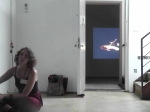
- Amapola Prada’s plenary presentation
-
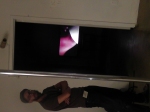
- Tuomas Laitinen in Amapola Prada’s installation/presentation
-
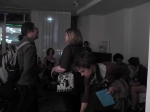
- Participants at Glasshouse
-
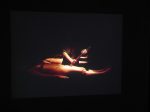
- REVOLUTION documentation shot of Amapola Prada’s plenary presentation
-
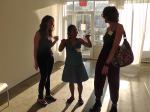
- Yelena, Amapola, and Lorene at Glasshouse
CONFERENCE PROGRAM
09/02/2013
Theorems, Proofs, Rebuttals and Propositions: A Conference of Theoretical Theater
September 6th-13th, 2013
Program overview
The conference begins with four plenary performances, each followed by a moderated discussion. The four plenary performances become the initial propositions of the conference, and conference participants respond to one or more of these propositions through some combination of written, spoken, or performed works. Response presentations will be held on Thursday and Friday, September 12 and 13.
Plenary presentations
Amapola Prada / REVOLUTION
(GP, Friday Sept. 6, 5-8pm, flexible entry)
Moderated Discussion with Amapola Prada and Anna Watkins Fisher (GP, Friday Sept. 6, 8-9pm)
Kikuko Tanaka / POULTRY PARADISE AND ITS DISCONTENTS: NIGHTSHIFTS
(PPL, Friday Sept. 6, 10-11pm)
Moderated Discussion with Kikuko Tanaka and Chloë Bass (PPL, Saturday Sept. 7, 4pm-5pm)
Reality Research Center/ PLATO’S SYMPOSIUM
(Acts I-III at MA, August 31-Sept. 5; Act IV at GP, Sept. 7, 7pm)
Moderated Discussion with Reality Research Center and Yelena Gluzman (GP, Sunday Sept. 8, 4:30-5:30pm)
Mike Taylor / IDEA MACHINE
(Workshop at CH, Sunday Sept. 8, 1-4pm)
Performance and Moderated Discussion with Mike Taylor and Gavin Kroeber (CH, Sunday Sept. 8, 6-7pm)
GP=Glasshouse Project
PPL=Panoply Performance Laboratory
MA=Momenta Art
CH= Collapsable Hole
(see VENUES for addresses and maps)
Day-by-day Schedule
Saturday August 31-Monday September 2
10am-4pm at MA: Reality Research Center, PLATO’S SYMPOSIUM (Act I)
Wednesday September 4
10am-4pm at MA: Reality Research Center, PLATO’S SYMPOSIUM (Act II)
Thursday September 5
10am-4pm at MA: Reality Research Center, PLATO’S SYMPOSIUM (Act III)
Friday September 6
5—8pm at GP: Amapola Prada, REVOLUTION (note: enter anytime between 5-8pm)
8—9 pm at GP: Moderated Discussion with Amapola Prada and Anna Watkins Fisher
10-11pm at PPL: Kikuko Tanaka, POULTRY PARADISE AND ITS DISCONTENTS: NIGHTSHIFTS
Saturday September 7
4—5pm at PPL:Moderated Discussion with Kikuko Tanaka and Chloe Bass
5:30pm-7pm at GH front gallery: Reality Research Center, ongoing gallery-style screening of video documentation from Act IV of PLATO’S SYMPOSIUM
7pm at GH garden: Reality Research Center, PLATO’S SYMPOSIUM (Act IV) (note: only people who have attended Acts I, II, and III may attend Act IV)
Sunday September 8
1—4pm at CH: Mike Taylor, IDEA MACHINE Pt.1 (note: this is a workshop requiring participation. You may choose to skip the workshop and only attend the performance at 6pm.)
4:30-5:30pm at GH: Moderated Discussion with Reality Research Center and Yelena Gluzman
6—7pm at CH: Mike Taylor, IDEA MACHINE Pt. 2
7:30 at CH: General wrap-up discussion and casual drinks
Thursday September 12
7—10pm at GP: Conference Participant response presentations
(note: the schedule for response presentations will be decided at the General wrap-up discussion on Sunday Sept.8)
Friday September 13
7—10pm at GP: Conference Participant response presentations
10pm at GP: Closing party
Conference participants and response formats
Invited Participants may present responses in a variety of formats, including written texts, academic papers, dialogues, performances, or some combination of these. Rehearsal space is provided by the Panoply Performance Laboratory in the intervening week.
A schedule for all response presentations will be made collectively during the wrap-up discussion on September 8 and live responses will be presented 7-11pm on Thursday, September 12 and Friday, September 13.
Venues
Glasshouse Project (GP) http://glasshouseproject.org/
246 UNION AVENUE, BROOKLYN, NY 11211 (between Scholes and Meserole) Nearest trains: L (Lorimer)G (Broadway), M & J (Hewes)
Panoply Performance Laboratory (PPL) http://panoplylab.org/directions.html 104 MESEROLE STREET, BROOKLYN, NY 11206 (between Leonard Street & Manhattan Ave) Nearest trains: L (Montrose), G (Broadway), M & J (Lorimer)
Momenta Art (MA) http://www.momentaart.org/
56 BOGART STREET, BROOKLYN, NY 11206 (between Harrison Pl. & Grattan St.) Nearest trains: L (Morgan)
Collapsable Hole (CH) http://www.collapsablegiraffe.org/current/Directions.html 146 METROPOLITAN AVENUE, BROOKLYN, NY 11201 (between Berry and Wythe) Nearest trains: L (Bedford), G (Metropolitan) Nearest Bus: Q59 (From Glasshouse Project to Collapsable Hole, walking takes about 25 minutes. You can also take the Q59 bus. If you going from Collapsable Hole to Glasshouse, take the “Rego Park” bound Q59 bus).
Conference Schedule and Registration
08/12/2013
CONFERENCE SCHEDULE
We are thrilled to announce times and locations for the conference September 6—September 13, 2013, in New York. Participation invitations are currently being sent out. Public attendance will also be possible, please click HERE to register as a general audience (conference participants will present work, and will be sent a different link to register). Public attendance registration provides full access, including, for the first 12 registrees, a spot in RRC’s 12-person project (note that this project begins before September 6th; see bracketed schedule below for details). Individual conference elements are open to the public and $10 suggested donation each. Venue information is below the schedule.
Friday Sept 6
5-8pm Amapola Prada / REVOLUTION (Plenary Performance, Glasshouse Projects)
8pm Amapola Prada / Moderated Discussion with Anna Watkins Fisher (Glasshouse Projects)
<dinner break>
10:00-11:00pm Kikuko Tanaka / Poultry Paradise and Its Discontents: Nightshifts
(Plenary Performance; Panoply Performance Laboratory)
Saturday Sept 7
4:00-5:00pm Kikuko Tanaka / Moderated Discussion (Panoply Performance Laboratory)
7:00pm-12:00am Reality Research Center / Plato’s Symposium (Plenary Performance; Glasshouse Projects)**
[**Please note: Reality Research Center’s performance Plato’s Symposium takes place in 4 Acts, from August 31st – Sept. 7th. Only 12 people can participate in the piece, and all 12 must be available for all parts of the performance. Please see the schedule for all four parts here:
Dates for RRC’s Plato’s Symposium:
Act I: August 31-Sept 2: A one-hour performance on any of the three days, between 10am – 4pm.
Act II: Wednesday Sept 4: A one-hour performance, between 10am – 4pm.
Act III: Thursday Sept 5: A one-and-a-half hour performance, choose 10 – 11:30am, 12:30 – 2:00pm, or 3 – 4:30pm.
Act IV: Saturday Sept 7: An evening-length performance, 7pm-midnight. Dinner will be served.
This performance can only accommodate 12 participants. Please do not register for this performance unless you are able to attend all four Acts. Registration is first come, first served.** (Reality Research Center is Maria Oiva, Jani-Petteri Olkkonen, Tuomas Laitinen; Photography and visual design: Visa Knuuttila; Food: Carmen C. Wong)
Register here for “Symposium”: http://jotform.co/form/32314931356855]
Sunday Sept 8
1:00-4:00pm Mike Taylor / IDEA MACHINE (Plenary Performance Part I; Collapsable Hole)
4:30-5:30pm Reality Research Center / Moderated Discussion with Yelena Gluzman (Glasshouse Projects)
6:00-7:00pm Mike Taylor / Plenary Performance Part II and Moderated Discussion with Gavin Kroeber (Collapsible Hole)
7:30 Casual drinks & wrap-up discussion
– – – In this intervening week, invited conference participants (scholars, artists, writers, and others) construct responses to the four plenary works in the form of performances, dialogues, and/or written texts. These works are presented on the following two days.
Thursday Sept 12th
7-10pm Participant response panels and performances (Glasshouse Projects)
Friday Sept 13th
7-11pm Participant response panels and performances (Glasshouse Projects)
Followed by a closing party.
VENUE INFORMATION
Glasshouse Project
http://glasshouseproject.org/
246 UNION AVENUE, BROOKLYN, NY 11211
Panoply Performance Laboratory (PPL)
http://panoplylab.org/directions.html
104 MESEROLE STREET, BROOKLYN, NY 11206
Momenta Art
http://www.momentaart.org/
56 BOGART STREET, BROOKLYN, NY 11206
Collapsible Hole
146 METROPOLITAN AVENUE, BROOKLYN, NY 11201
March 23rd!
03/14/2013
 Dear friends of theorization at large:
You are most cordially invited to an intimate preview benefit on Saturday, March 23 at Glasshouse Projects (246 Union Ave, Brooklyn) featuring a lecture by Dr. Gayatri Chakravorty Spivak, an excerpt of G. Douglas Barrett‘s Hence Where Labor performed by Fahad Siadat and Robert Ashley‘s Public Opinion Descends Upon the Demonstrators, performed by Varispeed. As part of this extraordinary evening, we invite you to contribute your written reactions, impressions, and notes from the lecture and performance to be sold at our silent auction at the end of the evening, allowing the ideas and events of the evening to circulate past the walls of the gallery.
This night benefits the production of Theorems, Proofs, Rebuttals, and Propositions: A Conference of Theoretical Theater, a conference framed-as-performance that will culminate in September, 2013 in NYC. This experimental conference theorizes that performance is not just an artistic medium, it is also a vast and complex conceptual structure reaching into every atom of society. We will be raising funds to facilitate the development of performance projects by four “plenary” artist-theorists, Kikuko Tanaka (Japan/USA), Amapola Prada (Peru), Mike Taylor (NYC), and Reality Research Center (Finland).
For tickets click HERE
Help us to find alternatives to interdisciplinarity by helping us organize *outside* disciplines and institutions. If you are not able to join us, but would like to contribute to the conference, we are very grateful for any donation online here.

For more information visit:
 A Preview Benefit for
Theorems, Proofs, Rebuttals, and Propositions: A Conference of Theoretical Theater
Saturday, March 23, 2013
6pm-10pm
Lecture by Dr. Gayatri Chakravorty Spivak
Performances by Varispeed and other guest artists
@
Glasshouse Projects
246 Union Avenue
, Brooklyn, NY
(M to Lorimer, G/L to Metropolitan-Lorimer)
Suggested donation $25 (donations over $250 tax deductible)
or reserve a seat online by donating $30 at http://previewtheaterastheory.bpt.me
If you can’t make it, please consider donating to the project via Panoply Lab’s fiscal sponsor HERE
Space is very limited!
A preview of and fundraiser for the upcoming Theorems, Proofs, Rebuttals, and Propositions: A Conference of Theoretical Theater, this evening draws together artists, scholars, and also theorists working outside institutions. The lecture by Dr. Spivak, on imaginative training for epistemological performance, will act as a provocation and catalyst for further discussions and, alongside music and theatrical performances, a live auction of critical theories written in the moment by the audience.
Gayatri Chakravorty Spivak is a celebrated critical theorist whose work has been particularly influential to the field of post-colonialism. Her research interest is the humanities as an instrument of gendered social justice. Spivak is University Professor at Columbia University. University Professorships are the highest honor awarded to faculty by the President and the trustees of the University. There are currently eight University Professors among the nearly 4,000 full time faculty at Columbia. Spivak is the only University Professor in the Humanities and the first and only woman of color to be raised to this rank in the University’s 258-year history. Indeed, there is no other Asian woman in the humanities who holds comparable rank in the United States. Spivak was the first woman of color with an endowed professorship at Emory University in Atlanta, and the first Mellon Professor in English at the University of Pittsburgh. In 1976, Spivak introduced the work of Jacques Derrida to the English-reading world through her translation of De la grammatologie. Through her 48 years of full time teaching at universities around the world, Spivak has taught literary reading as a way of preparing for the unconditioned (ahaituka) ethical, rather than rational choice utilitarian decisions, encompassing feminism as well as the intuitions of democracy. Since 1986, Spivak has expanded this effort among the children of the rural landless illiterate by establishing small elementary schools in Purulia and Birbhum districts of West Bengal, training teachers chosen by the community. These schools are subsidized by her own salary, because Spivak believes that the evaluative standards of the international civil society are too restrictive for the training of a democratic electorate. With the help of the Tarak Nath Das Foundation and the enthusiastic support of the community and the Beej Nigam of the Government of West Bengal, she is launched on an ambitious project of ecological agriculture. She was born in Calcutta, India, in 1942. She is the author of many influential works such as In Other Worlds: Essays in Cultural Politics (1987), Outside in the Teaching Machine (1993), “Can the Subaltern Speak?” (1985), A Critique of Postcolonial Reason: Towards a History of the Vanishing Present (1999), Death of a Discipline (2003), and Other Asias (2005). In 2008 Seagull Books (Calcutta) published Who Sings the Nation-State? a conversation with Judith Butler. Her more recent works include Nationalism and the Imagination (2010) and An Aesthetic Education in the Era of Globalization (2012). She has translated from the Bengali extensively, including 18th-century hymns.
Varispeed is a collective of composer-performers from experimental theatre group Panoply Performance Laboratory, ensemble thingNY, and Why Lie? that creates site-specific, sometimes-participatory, oftentimes-durational, forevermore-experimental events. Founded by Aliza Simons, Dave Ruder, Paul Pinto, Brian McCorkle, and Gelsey Bell, Varispeed came together in June 2011 to perform a twelve-hour celebration of Perfect Lives Brooklyn before they were invited to perform the critically-acclaimed Manhattan version in November as part of PERFORMA ’11. Their new arrangements in Perfect Lives Manhattan made Time Out New York and New York Times’ critic Steve Smith’s “Best of 2011” list. Subsequently, Varispeed presented on Perfect Lives at Performers Forum and began a series of 1-minute recorded operas, each dedicated to a supporter of the collective. In August 2012, Varispeed presented their second full scale project, an over-night, 12-hour arrangement of John Cage’s Empty Words, which was presented at Roulette, Exapno, and across the Brooklyn Bridge.
Theorems, Proofs, Rebuttals, and Propositions: A Conference of Theoretical Theater is an experimental conference based on the premise that performance is not just an artistic medium, it is also a vast and complex conceptual structure reaching into every sphere of society. Scheduled for September 2013, the conference recognizes, frames, and authorizes performance-making as a constructive theorizing and envisioning act with the agency to escape autonomous artistic spheres and participate in co-construction of public discourse. Significantly, the conference begins with four theoretical positions, each presented via performance. The conference is structured to allow participants to respond to, rebut, and extend the views presented in the four initial performances, through discussions, talks, and conference publications. The four theoretical performances that provide the core of the conference will be presented by Mike Taylor (USA), Reality Research Center (FINLAND), Amapola Prada (PERU), and Kikuko Tanaka (JAPAN/USA). This benefit primarily funds air travel for international participants.
Theorems, Proofs, Rebuttals, and Propositions: A Conference of Theoretical Theater is conceived and organized by Esther Neff (Panoply Performance Lab) and Yelena Gluzman (UCSD), and supported by a grant from Culture Push’s Fellowship for Utopian Practice.
To contact conference organizers, please email theatertheoryconference@gmail.com
CORE THEORETICAL PROJECTS ANNOUNCED
01/29/2013
We are pleased to announce the four theory performances that will provide the core of Theorems, Proofs, Rebuttals, and Propositions: A Conference of Theoretical Theater. These four performances will be the basis of all further formal and informal responses, talks, and panels within the conference. The four projects were chosen from a large number of proposals, and we are looking forward to some very interesting provocations.

Mike Taylor (USA) will present IDEA MACHINE: Experiments in Theatre Techniques for Audience Transformation, a work reflecting on the conditions of theater itself, and focusing on instances of compression and transformation.

Reality Research Center (FINLAND) will perform MYSTERIES OF LOVE, a monumental performance series in the form of an esoteric school in which repeated lessons on eros guide the pupil toward an experience of absolute beauty.

Amapola Prada (PERU) will show REVOLUTION, a piece that posits methods for relating ideologic structures to the body via the artist’s own pessimism.

Finally, Kikuko Tanaka (JAPAN/USA) will present POULTRY PARADISE AND ITS DISCONTENTS to investigate the constructed nature of revolt/resistance, intertwining sexuality, and artistic production.
***
The conference will take place in September 6-14th, 2013 in New York City. Schedule is coming soon.
DEADLINE EXTENDED
07/18/2012
The new deadline for proposals is AUGUST 15, 2012
OVERVIEW
This durational conference is foremost a collaborative performance project between the conference organizers and conference participants. The conference will begin with four performances/propositions, and will proceed in an outward dialogic spiral, with events structured to allow participants to discuss and respond to these initial presentations.
The initial four performances will be chosen from proposals submitted via an open call. Over the course of three months, organizers provide time, space, and resources to four theorizing performance-makers. Performance-makers/theorists need not have any theater or formal artistic background, but must propose to use the form of performance to enact a theoretical position or question. The process of performance-makers/theorists is likely to resemble the following:
1.) Theorist approaches a question, hypothesis, or problem/paradox
2.) Theorist researches the question, tests the hypothesis, or re-creates/makes evident the problem/paradox
3.) Theorist answers the question, proves or disproves the hypothesis, or formalizes the problem/paradox AS A PERFORMANCE.
Each project will be paired with a critical writer (an arts writer, philosopher, cultural critic, etc), who will observe the process of creating the presentation and be in dialogue with the theorist, becoming the first formal respondent to that work. This first stage of production will culminate in a conference weekend in New York City, during which conference participants will gather and the four projects will be performed. In Stage 2, panel discussions lead by the four critical writers will follow each performance, and conference participants will be invited to consider and discuss the presentations via various political, theoretical, and analytical contexts of their choosing. All participants in this public weekend conference will also be invited to submit written responses to be published in a hard-copy Gazette and online; these written documents constitute the third stage of the project. Stage 4 will consist of a final day-long public discussion that will consider the written responses and previous discussions. The entire process will be documented and excerpts made available via online or print publishing after the event.
Theorems, Proofs, Rebuttals, and Propositions: A Conference of Theoretical Theater began with the simple conception of “theater” as a public site for insight (in Greek, theater means ‘seeing place’), tied intrinsically to theory or ‘ways of seeing.’ This conference is based on the premise that performance is not just an artistic medium, it is also a vast and complex conceptual/ philosophic structure (multiplicitous, logarithmic, exponential, quantum). We posit performance as an “uncanny social science,” a way of researching human social experience by being it, by encompassing, constructing, simultaneously causing and being caused-by business, community and kinship conceptions, systems of definition like gender and race, political and intuitional constructs, and so on. There is no praxical division between academic fields of inquiry. Modes must be researched and developed by everyone, across artistic mediums, across social and “hard” sciences, across daily living patterns, across conversations and other communications.
The project seeks both to recognize, theorize, and authorize performance-making as a constructive theorizing and envisioning act that may have the agency to escape autonomous artistic spheres and participate in co-construction of public discourse and, as a performance project itself, to invent, theorize, test, bend, expand, and corrupt the conference’s own overarching theory and mode of production.
**********************************************************************
TIMELINE
Open Call out April 15, 2012
Proposals due August 1, 2012
Theorists and Writers notified October 1, 2012
March-June, 2013 Fundraiser and open rehearsals
July 12, 13, 14, Public Conference is held in New York City
July 30, Gazette released
Mid-August, TBD, 2013, final critical panel in New York City
*********************************************************************
STAGES
This process and the emergent conference will be organized in 5 stages.
Stage One: Open call for theoretical performance proposals. All proposals due AUGUST 1, 2012
Successful applicants will be notified by October 1, 2012. In some cases, conference organizers might ask for revisions to develop proposals for possible inclusion.
Stage Two: The chosen proposals are developed.
During the development, we provide at least 10 hours of rehearsal space, as well as access to Materials for the Arts, web-hosting, and assistance with publicity and marketing. Contracts will be tailored to each project.
At least one open rehearsal will allow theorists to share their process with each other and the public.
Theorists will also participate in interviews and post research online. Each project will be assigned a critical writer (who may be an arts writer, performance theorist, art historian, or other cultural critic whose primary mode of response is through writing), who will in later stages will be asked to provide a critical perspective on that work and will lead the post-performance discussion.
Stage Three: A weekend-long conference, during which all works are performed.
Each performance will be followed by an open discussion, each one moderated by the critical collaborator paired with that project in Stage 2.
Stage Four: All conference participants are invited to respond to any one of the performances (including their own) in writing, either with a critical response, or with a theoretical/performative response.
A number of these responses will be published in a hard-copy Gazette form and made available to participants. Other responses will be available online.
Stage Five: A final panel discussion will be held to discuss the works presented, documentation, and the critical responses the exponential theories generated.
This panel discussion will take into account viewpoints theorized in the published written responses. The panel will be comprised of conference participants, both the featured theorists and others, who, after Stages One – Four, express a strong interest in discussing the preceding presentations.
************************************************************
OPEN CALL
Applicants need not be artists or performers, nor have experience with creating performance, but may also be historians, philosophers, cultural critics, activists, scientists, or thinkers in any discipline. Similarly, theories need not be specifically theories of performance, but can be theoretical positions dealing with any aspect of time, space, causality, communication, morality, mind, body, society, being, aesthetics, politics, arts, sciences, knowledge or other major theoretical concerns that can be activated in the situation of performance. Successful applicants will propose the active mode, form, or medium of their theory, instead of simply describing their theory in a theatrical style. It is expected that given conditions of performance (not limited to venue, audience, authorship, shared temporality, etc.) will be utilized or subverted in order to instantiate a theoretical position.
Prospective theorists/performance-makers should request the materials and resources they need to develop and perform their project, and be as specific as possible in describing their intended project. Applicants must be available during the times specified in the timeline.
Four proposals will be chosen by a small interdisciplinary panel of jurors based on cohesion of vision and feasibility.
To apply, please follow the guidelines below. The deadline is August 1, 2012.
PROPOSAL GUIDELINES
1. On the top of the first page, please include the following information: Name, Address, E-mail, Phone number, Website (if applicable)
2. Please send a proposal (less than 2 pages) for a theoretical performance. Please be as specific as possible. Proposal guidelines are purposefully vague in order to allow for a multiplicity of approaches.
3. In a separate paragraph, please attempt to foresee technical requirements, spatial/architectural needs, and other anticipated necessary materials for your proposed project.
Please email your proposal as an attachment, along with a CV, resume, or narrative biography (up to 500 words).
Both individuals and groups are welcome to apply. Send your application to theatertheoryconference@gmail.com no later than August 1, 2012.
The form of this conference is unusual, and it seeks to engage an interdisciplinary community of thinkers. Therefore, you may have questions about one or more aspects of the conference or the call for proposals. Please do not hesitate to e-mail us with your questions, requests for clarification, or comments.
 Theatre as Theory